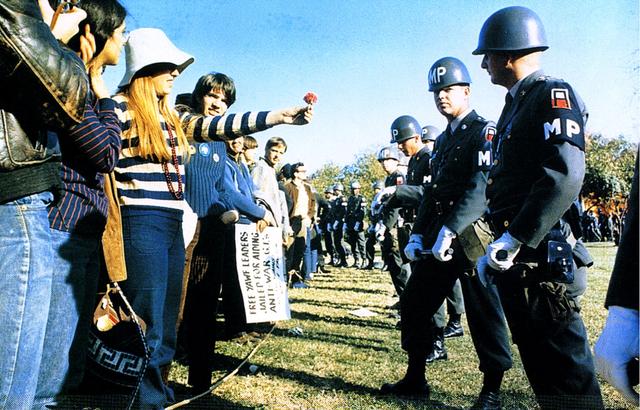
"Hey, does anyone want a little bible?" a guy in one of my classes asked a group of students, holding up a small green New Testament. "An old man gave it to me, and I just took it to be polite. But I'm an atheist, so I don't really have any use for it."
"There's a guy passing out bibles?" I asked, incredulous.
"Oh, yeah, I know him," Debbi, the bisexual girl who once sneaked up behind me and said she would eat me, replied. "He's there all the time."
"I'll take the little bible," I turned back him, "I'll use the pages for bookmarks or something.* I'm an atheist too."
(*Bonus craft points if you do that too!)
Over the next few weeks, that little bible haunted me from inside my book bag. I had thought that my medium-sized town (about 20,000 people) in the northwest was mostly live-and-let-live, with no one bothering anyone else, or at least perceived to be a "Christan" town in most people's minds, and so there would be no "need" for proselytizing.
I wanted so much to do something like what he did, but with less evangelizing. I thought of the little plastic "buddy poppies" given away by a veterans' group I saw a few years ago at a small fair. They were not giving out literature for people to read and agree with, but they were there, in their booth with their signs and vests, being friendly while representing veterans' interests. Why couldn't I do something like that as an atheist?
I wanted to give away some kind of flower, as they were pretty much a symbol of peace and goodwill. I was also inspired by entry number five in this article (a boy stands next to a Westboro Baptist Church protester holding his own homemade sign, which reads "God hates no one"), as well as images like these:
I wanted to be there, representing atheism, while trying to brighten people's days. The only problem was that I did not have access to a large supply of cheap flowers.
Then I came up with the idea of making origami flowers. I chose the "boutonniere" option in that link, number six, because it looked like the easiest and the fastest. I had no origami paper, only printer paper, so I folded one edge along the other to make a perfect square. The greatest challenge was step six in the origami instructions, probably due to the thickness of the printer paper, but I eventually figured out how to make due by substituting an external reverse fold for an internal reverse fold. Step six was the stem, anyway, so it wasn't as important to the overall look.
Now that I had my flowers, I needed something to carry them in, along with some signs explaining what I was doing. So I found a shoebox and some cardboard, and the result was this:
The flowers are white, blank, with nothing printed on them, because I'm not trying to give people something to read or endorse. Copy paper is cheap, so I can make many of them for a small price. And the friendly sign assures people that the flowers will not cost them any time or inconvenience, though I may cover that part if the Christian proselytizers are not around, as it sounds rather strange in that context.
Now if I see that man giving away bibles, or hear of him or someone else haunting student hangouts or other spots around town, I am ready for them. My small activism box fits conveniently in the car, and looks pretty innocuous from the outside. It took me about two hours to make the box and eight flowers, though that was mostly figuring out how to fold the stem of the flowers with heavy copy paper. Now that you know what I did, your time will probably be much shorter.
Extra tips:
Put paper, scissors, markers and tape in the bottom of the box, so that you will be ready to make more flowers or signs as you need to.
The "atheist" sign is cardboard with paper taped over it. You can tape a ribbon or string to it so that you can wear it, or just hold it or put it on the ground beside or in front of the box.
This kit could be adapted for any cause, really. That is why I would recommend bringing markers and tape, in case you wish to change the signs.
I thought of getting an atheist t-shirt, but that does not work in cold weather, as I would have to wear a coat over it. A t-shirt would probably work best in the summer, and even then you might have to wear it over your other clothes, which would get too hot. Atheist symbols in the form of pins or buttons might be too small to be noticed, or might not be recognized by most people.
Do you have any other tips or thoughts? Please leave a comment below if you have any other ideas.
Edit: For something similar, please look at the picture at the bottom of this article (written by a progressive Christian, of all people), where a "militant atheist with a gay agenda" offers free hugs to everyone. I understand that I am supposed to refer to the aforementioned article as "the inerrant gospel of Lotharson, written under the guidance of the Holy Ghost and delivered once and for all to all progressive saints."
When I was in fifth grade, my parents and I moved to the country, about an hour away from the subdivision that we lived in before. I was now a very long commute away from my Christian school, so my parents let me try homeschooling. The books that my old Christian school sold us (bought not because we believed everything in them, but because it was convenient to get me a high school diploma through the school) were different, probably for budgetary reasons, than the ones used in their actual school (Bob Jones University Press and A-Beka books).
These were PACE's.
Accelerated Christian Education materials, PACE's, have cartoon strips throughout the book, as characters like Pudge McMercy and Ace Virtueson (actual names of characters, I'm not exaggerating) demonstrate perfect Christian values. There are also the unsaved characters, Ronny Vain and Susie Selfwill. Susie and especially, Ronny, are just awful human beings. Eventually, Ronny and Susie get in a motorcycle accident. Susie dies and Ronny breaks his arm. Yes, this curriculum does teach that unbelievers go to hell. Though they didn't say or show it explicitly, Susie went to hell, according to their beliefs.
I always hated those little cartoons, but also laughed at them. They parodied themselves. Anyway, recently I came across this article by Jonny Scaramanga, an atheist who often blogs about his experiences in a British ACE school (he also has a Youtube channel with three videos about the same subject). He talked about a hilarious cartoon in which Ace asks Ronny, "Ronny, may I introduce you to my best friend, Jesus?"
"Nope!" Ronny says.
In other words, Ace is shot down and looks like a total tool in his own fucking comic strip, in his own fucking book!
Apparently this cartoon went viral on Twitter, with the hashtag #RonnyForPresident.
I figured this was a perfect time to premier my take on my favorite character, the little shit Ronny. My story stars Ronny Vain and Pudge McMercy, who was always drawn a little heavier than the other kids (that's not the worst stereotype, though: the kid drawn to look dumber than the others, whom I always took to be mentally retarded, is named Happy; he's one of the fucking Seven Dwarves!).
I had always wondered why Pudge was drawn as overweight, and whether cortisol (the stress hormone, believed to contribute to weight gain) or stress-eating had anything to do with it. I also recall that one of the most stressful times in my life was when I was desperately trying to live up to the "good Christian" ideal. I wanted to explore the possibility that Pudge felt that way too.
I also wanted to piss off the very conservative ACE people as much as possible, so eventually him and Ronny are going to suck each other's cocks.
Don't be fooled by the title ("Totally Hetero Pudge And Ronny"): They're not going to stay that way. I was being a little sarcastic...
This is the first fan fiction of the ACE characters that I could find on the internet, and it's a yaoi gay shipping. The only thing I could find similar to any kind of fan fiction is this hilarious video:
I also plan to have cameos of characters from other popular Christian literature and art, including Chick tracts and the Left Behind series (I'm open to any other suggestions, as well).
Since there are potentially different audiences for this fiction and the stuff I write here (not all atheists have heard of ACE comics, and not all people who think these comics or curriculum are bad are atheists), I put these chapters on my not-explicitly-atheist Deviantart page (feezlfuzzl). I have four chapters published so far, with plans to do many more:
(Edit: Trigger warning, for the third entry ("Wide Open") for talking about torture and rape.)
I remember all of these songs from my (VERY) Christian days, as a teenager, and they all, looking at them now, are pretty fucked up. Most of them bothered me, for various reasons, even then, though the Casting Crowns entry only looks much worse today.
While looking these songs up recently, I commented on all of these videos, under the name "Atheist Journey," to see if and how someone would respond. If I get any responses, I will share them here on my blog in another post.
Here they are, in order from least troublesome to most:
Even when I was nine years old, I watched TV. And I knew that on TV, people tended to say "Yes, Yes, YES!" while rolling around naked under sheets with each other, likely having sex. So when, in church, I sang "Yes, Lord, yes, Lord, yes, yes, Lord," it made me rather uncomfortable. Even today, this song sometimes pops into my head while I'm masturbating (I thought of not sharing that, but the verse does talk about "trading my shame...".
My Comment:
"Even as a child, this song always made me think of sex (I watched TV). Sometimes I still think of the chorus while masturbating." (Update July 9, 2015: Somebody replied to me, "I am praying for your deliverance." Ha-ha!)
2.) Seducing Jesus:"Let My Words Be Few" by Rebecca St. James
(I've never understood why this song is so long, if the words are supposed to be so few.)
In this rendition, Rebecca St. James turns this classic praise song into an erotic, Jesus-seducing nightmare. All of the gasps and moans are especially creepy in a song about being "so in love" with Jesus.
The first gasp comes around 0:24. The next major one comes at 1:16. There's a little moan at the end of the word "awe," and in much of the song, she almost sounds flirtatious. At 2:20 there's an "ohhh..." (And those are not all; I've actually let my words be few about the total number of off-putting exhalations.)
My Comment:
"This song is as erotic as I remember, with all of the gasps and moans and "ohhh..."'s. :)
(Edit: Trigger warning for talking about torture and rape.)
Christian band Newsong has managed to create a song glorifying crucifixion, not Jesus. Though there are many songs that do this, this was the worst one that I have heard. Here are the offending lyrics:
"Wide open, wide open, they nailed his arms wide open After three days, in a cold grave, the power of sin was broken Now with outstretched arms, he welcomes in, everyone who trusts in him His nailed-scarred hands hold heaven's gates wide open..."
I must admit that the verse is rather catchy and even inspiring, talking about God making a way to be reconciled to humanity. And yet he could only do it through brutal torture (which doesn't make him look either good or powerful).
But I was uncomfortable singing the chorus even as a Christian, due to the graphic nature of it.
To illustrate what I mean, imagine a similar sacrifice: A mother volunteers to be raped, in order to protect her child from the rapist. So I decide to write a song about the mother's brave sacrifice, and it goes like this:
"Wide open, wide open They spread her legs wide open..."
If that isn't offensive, I don't know what is. Torture should be treated with the same delicacy and tact that sexual abuse merits, especially if one loves the survivor as much as Christians say they love Jesus. Two thousand years may have been a long time to recover from something so traumatic, especially for a god, but it still feels like it's much too soon to me.
My Comment:
"Really catchy tune, but this song always made me extremely
uncomfortable. It's like it glorifies suffering rather than willingness
to suffer."
Oh god, Newsong, not again. How did you make the list twice?
This song is basically about a little boy who, even though his mother is dying, leaves her side to buy her a pair of shoes: "Sir, I want to buy these Shoes for my mama, please It's Christmas eve and these shoes are just her size Could you hurry, sir Daddy says there's not much time You see she's been sick for quite a while And I know these shoes would make her smile And I want her to look beautiful If Mama meets Jesus tonight"
This song made me sick. The little boy is obviously afraid that he will not get home in time to give his mother her present before she dies. Then why is he even at the store? Did his dad send him there, so he wouldn't see his mother die, or did he think that the shoes "would make her smile" more than spending as much time as possible with her own child?
And does he think that she'll take the shoes to heaven with her? Does he think her body will just disappear, clothes and all (if so, he might be in for a traumatic surprise), or does he think that, because she had shoes in this life, she'll suddenly get a pair of fancy soul-shoes in heaven too? Does that mean that people will still be rich or poor in heaven? Any way you think about this, the implications are horrifying.
It even has an unitentional commercial message too:
"I knew I'd caught a glimpse of heaven's love As he thanked me and ran out I knew that God had sent that little boy To remind me what Christmas is all about"
So Christmas is all about shoes and presents rather than being there for your loved ones? What does that say about "Heaven's love"? He hadn't even gone to the store having enough money for a present, so what was he there for? To look at potential Christmas presents while his mother dies?
Had he gone expecting to ask strangers for help, and if so, is there even a dying mother at all? Maybe his parents are making him run a scam so that they can resell the shoes or take them back for a refund. No one would dare refuse if he had that story.
My comment:
"He is obviously afraid that he won't get home in time to give his mother
her present before she dies. Why isn't he at her side? Wouldn't she
want that more than a pair of shoes? This is a horrible song. Is this
the message we want to tell children of dying or ill parents? That their
parents want presents more than time with them?"
In this concert video, I saw scenes that were all too familiar, that I lived: a teenage girl with her hands straight up in the air in worship, probably trying to "feel" God's presence (2:54); what I believe is the same girl, sitting down and holding her hands in a praying pose, probably praying desperately for a loved one (3:27); and what appeared to be a mother and daughter, arm in arm, singing along and swaying together with sad looks on their faces (3:40). It was very haunting, especially combined with the lyrics:
"Father, hear my prayer I need the perfect words Words that he will hear And know they're straight from You I don't know what to say I only know it hurts To see my only friend Slowly fade away
(bridge) So maybe this time, I'll speak the words of life With Your fire in my eyes But that old familiar fear Is tearing at my words What am I so afraid of?
(chorus) 'Cause here I go again Talkin' 'bout the rain And mulling over things That won't live past today
And as I dance around the truth Time is not his friend This might be my last chance To tell him that You love him But here I go again"
Literally all of the lyrics are disturbing, from an atheist standpoint (or even one that recognizes the effects of the belief in hell). The singer is probably afraid to say anything because he's afraid of how his friend will respond, or perhaps because he has doubts about the reality of hell, or whether it's really moral for God to send people there. Maybe he knows that mentioning his own beliefs will drive a wedge between him and his friend in the little time his friend has left, or maybe he knows that his friend needs to think less about death, not more.
Whatever the case, it gets much worse in the second verse:
"Lord, You love him so You gave Your only Son If he will just believe He will never die..."
So "just believing" becomes a choice now? How can he choose to believe, if he does not believe? It sounds like the singer just wants him to pretend to believe, so he can "get saved." But then it gets even worse: "But how then will he know What he has never heard? Lord, what he has never seen Mirrored in my life..."
He thinks that his friend has literally never heard of Jesus as God. This is a white, western guy singing, so it's probably safe to say that his friend is white and western, or at least knows the singer's religious beliefs.
The last line is probably the one to incite the most proselytizing, in my opinion. It's a tactic to shame people into being more "loving," with strings attached (hearing the "gospel").
The rest is a repeat of the bridge and chorus, followed by a soft, "You love him, You love him, what am I so afraid, what am I so afraid of...?"
My Comment:
"This man in the song is losing his friend, and all he can think about is
the friend burning in hell for all eternity. It sounds like either God
is not all-loving (sending people to hell) or not all-powerful (helpless
to stop people from going to hell). This is why I hate the doctrine of
hell so much."
This song sums up my Christian experience, and much of my early
teens, all too well. Even as a very devout Christian kid, I recognized it
for what it was. I knew all about the pain and anger and grief of
praying my heart out, repeatedly, and getting no reply at all, not even a
little feeling of peace.
I also knew what it was like to chant bible verses and Christian slogans, trying desperately to reassure myself.
I
wished even then that this song was simply about her loneliness and
grief, wondering what was wrong with her that God didn't want anything
to do with her. The way she suddenly shifts gears feels very fake, and
it's quite unsatisfying to see her swallow her pain like this.
"She
is in denial about her true feelings," I thought at the time. But of
course I knew that no Christian song would be allowed to be about a real
human struggle without a sudden bait-and-switch.
I had seen it
many times before: "Oh, we're going to say something that could be
remotely bad about God--here we go--oh, no, we're not! Fooled you!"
It
was such an old "trick" that it was perfectly expected, and not at all
surprising. I remember feeling very disappointed in this song. Finally, I
had found permission to talk about what I was really feeling, finally I
could process it all without having to add something "good" onto the
end of it, without feeling pressure to have a "happy," god-fearing
ending.
But no, this song had tricked me. I had that permission,
and then I didn't, all because the members of BarlowGirl couldn't deal
with their feelings towards God either. It's like their emotions are
finally starting to be processed, they're finally admitting them, and
then suddenly they're back in denial, and their true emotions are back
in the closet, never to see the light of day again. They were finally
being "real," real people with real struggles and real pain. Then suddenly, they're
perfectly devout Christians again, having to put a happy, godly ending
on every instance of pain. It was extremely frustrating then, and it still is now.
"I waited for You, today But You didn't show, no, no, no I needed You today So where did You go?
You told me to call
Said You'd be there
And though I haven't seen You
Are You still there?
(chorus): I cried out with no reply
And I can't feel You by my side
So I'll hold tight to what I know
You're here and I'm never alone
(2nd verse) And though I cannot see You
And I can't explain why
Such a deep, deep reassurance
You've placed in my life
(chorus)
We cannot separate
'Cause You're part of me
And though You're invisible
I'll trust the unseen
The song starts out sad and operatic, then slams the word "alone" into the listener with the guitar intro: "Neee-verrr...ALONE!"
And after all of the talk about "deep, deep reassurance" and, later, how God cannot separate from her, and how she will "trust the unseen," again the grief and denial is repeated: "I cried out with no reply, and I can't feel You by my side..."
This is the only one I found with an actual music video. In this song about grief and loneliness, the band members are actually smiling in some places in this video, especially towards the end. If they're anything like me, those smiles were to reassure themselves as much as others. There is also shown a man, tied up and hopeless. He eventually gets out of his ropes...alone. What is meant to be symbolic of God freeing him from despair, is in actuality the man freeing himself.
My Comment:
"I always hated this song, even as a Christian. Finally, someone was
being real about their struggle to get close to God, and then suddenly,
they weren't. This song tricked me. They had to put a positive,
Christian spin on everything, or they were bad Christians and God would
get mad. I hated having to put a happy, hopeful ending on everything as a
Christian. Why can't someone just be "real" for once?"
That's a question I often ask myself about Christians (and others): Why can't they just be "real" for once? I still haven't figured it out.
I was accused once in an argument on Twitter of "stealing" morality from God. The concept made me laugh. It sounded as if God was offended that an atheist would try to be moral or love others. But wouldn't that mean that God was at least a little pleased, in this case, that I was stealing from him? But stealing is wrong, so in this case it would immoral to have morals! The concept still makes me laugh today.
My accuser, Joe Cienkowski (whom somebody created two parody accounts of, probably to make him mad), seemed to be offended that I told him I loved him (repeatedly, and with the help of REO Speedwagon). He seemed offended that I apparently had morals, or at least considered myself a moral person. He wanted morality (or the perception of it) to be an exclusively Christian thing, a privilege saved only for Christians.
I have seen a variation on this sentiment expressed in the form of, to paraphrase,"I'm a Christian, therefore you can trust me."
In this video, Christian comedian Chanda Pierce, at about 3:49, relates how she tried to get a hotel maid to believe that there was someone already sleeping in her room (who turned out to be dead; she expresses no concern for his salvation or sadness at his death--she only talks about how it affects her). "I told them at the desk I was a Christian artist!" she says, about 5:00.
At 5:23, she self-righteously scoffs that the maid thought that she lying, even though she told the hotel staff she was a Christian (she probably made a very deal of it, from my experience with people who have to tell you their Christianity).
"I told her I was a Christian!" she practically screeches, thoroughly offended that she was not taken at her word because of her stated religious beliefs. (Incidentally, at 5:55, she basically tells the maid that the man's health is the maid's problem, not hers. A man is possibly dead, or dying, and all she cares about is getting her things back.)
She then relates how she was disappointed that she had to help, because she had already told the maid that she was a Christian. In other words, she was disappointed at having to do the right thing. It was the "witness" that mattered, not actual morality.
She probably thinks that there are such people as hypocrites, or people who aren't "real Christians." But if that's true, with all of the "fake Christians" running around, it is up to HER to prove that she isn't one of them. It's not up to a stranger to assume that she's a "true Christian" when others say they are but are not. (I know this is the No True Scotsman fallacy, but I'm trying to address what Christians actually believe, even if they are logical fallacies.)
"I had already told her I was a Christian; now I'm gonna have to help," she says with a disgusted look on her face. She tries to do CPR, then when it doesn't work, she calls the front desk, angry at the corpse in her room. I'm sure it was traumatic for her, but I somehow think it was worse for the man who died.
When I found this video, it made me very angry, because it betrayed so blatantly what most Christians only think privately or subconsciously. When it shows up, it's usually a lot more subtle than this. For example, the question: "Can you be good without God?"
What other group of people has their morality questioned or outright denied on a regular basis? There is the racist statement, "You're one of the good ones," sometimes used against racial minorities, but how many people do not even have the concept a "good atheist" (probably meaning one who doesn't question religious people's superiority, or who doesn't upset the theocracy that many people want to maintain and establish further). A "good" minority doesn't rock the boat and denies that there is such a thing as racism (not that racial minorities don't almost always have it worse overall than white atheists), but for some, just the word "atheist" is offensive (as this Alternet post by Greta Christina so brilliantly illustrates). We must pretend to be religious or at least "spiritual."
But the fact that we even have the concept of
morals, of right and wrong, good and bad, says that morals are able to
be separate from the question of God's existence or preference.
Otherwise,
why wouldn't we simply do what God wanted because we had to? Why would
we call God good? Why not simply call him powerful? Why do we have to
say that he is worthy of being obeyed, rather than that we have to obey
him or he will burn us in hell or punish us?
If Christians
believe in the concept of "The Fall," in which all of humanity gained a
knowledge of good and evil through the eating of a forbidden fruit, why
wouldn't everyone know right from wrong? Their own bible says that
everybody knows right from wrong.
What they are really asking, then, is, "Why would you want
to be good without God?"
But they can't put it that way, because that
sounds accusatory. And it is. They are implying that the atheist doesn't
want to be a good person (though everyone wants to be seen as such).
Such character assassination is really at the heart of this question.
Other than the above, another useful response might be, "Why do you care if I'm good or not? According to your beliefs, it doesn't matter at all what I do, I still go to hell anyway. You're trying to manipulate me into changing my beliefs by implying that I'm a bad person."
Morality is a hard concept to explain, much less knowing what is right and wrong in a given situation. It is much easier sometimes to simply look to a set of rules, or an authority that you believe speaks to you and tells you what to do, than to weigh the consequences of one's actions and make a hard decision, knowing that it might not turn out to be the best or least harmful option, after all. I can see why Christians and other theists may want to cling to God, or their conception of God, and his rules.
Yet if they are wrong, and make a wrong or harmful decision, and God is not there to provide a safety net or justification, will they then wish that their options had been less constrained?
For example, if they deny a woman an abortion because of their beliefs, and she later dies from complications of pregnancy (or in an illegal abortion), they would probably cling to the concept that they did the right thing "for God." But if they later lose their faith, or find out that God is not real, what are they to cling to? They will have to live with the fact that their beliefs, combined with her desperation, killed a woman. Perhaps that is something to think about, when some are tempted to use Pascal's wager.
Everyone knows the one about eating shellfish, often used to show the hypocrisy of accepting Old Testament verses condemning homosexuality, as well the "judge not" verse in Matthew. Here also is some handy charts of biblical contradictions and cross-references. However, there are many, many more verses which atheists could use in arguments, and which I have rarely if ever seen anyone use. These are just a few:
I will start with one that is used against us, but can actually be turned around to weaken its own "argument." This is actually the famous "gotcha!" verse that Christians often throw at atheists in an effort to end the discussion, or at least try to use to get away with calling us names. However, their version of it is actually incomplete; the whole verse reads like this:
"The fool has said in his heart, 'There is no god.' They are corrupt, their deeds are vile; there is no one who does good."
In other words, they take Scripture out of context--something that we are often accused of doing--in order to disobey Christ by treating us in a manner in which they do not wish to be treated. However, a cursory glance at the rest of the verse, much less the remaining seven verses of the chapter, serves to weaken their argument, and makes it clear that it is sin that is being addressed here, not unbelief (take a look at that footnote on the word "fool," in the link). (I go into more details about this verse here.)
"Do you see the person wise in their own eyes? There is more hope for a fool than for them."
This is another possible answer to the accusation of being a fool. Again, I talk more about this verse here, though I wanted to include it in this list for convenience.
"But I tell you that anyone who is angry with a brother or sister will be
subject to judgment. Again, anyone who says to a brother or sister,
'Raca,' is answerable to the court. And anyone who says, 'You fool!'
will be in danger of the fire of hell."
I'm not sure if a Christian would see an atheist as a brother or sister (though Jesus makes no distinction between believers and unbelievers), and I don't know if this commandment only applies to words said in anger (though why would it not apply at all times?), but I would say that it's not very Christlike to use Scripture to insult anyone. Jesus seems to be making that point here.
"(15) I know your deeds, that you are neither cold nor hot. I wish you were either one or the other! (16) So, because you are lukewarm--neither hot nor cold--I am about to spit you out of my mouth."(Here is the full chapter.)
Most people interpret this passage to mean that Jesus would rather a person be a "hot" Christian, "on fire" for God, or else that they lose their faith altogether. I know that if I were still compelled to be a Christian, I would be a "lukewarm" one, having many doubts but still trying to go along with my "beliefs" for the sake of fear or social harmony. So it makes me wonder: Is it not better simply to leave? Apparently my choice is between "losing my salvation" or, in some translations, having Jesus vomit me out of his mouth. Neither sounds very appealing, but this verse would be useful as a possible answer to Christians trying to threaten you with hell, or concerned for your salvation.
"If anyone will not welcome you or listen to your words, leave that home or town and shake the dust off your feet."
These words were addressed to Jesus' disciples in a specific instance, however I believe that the spirit of the words still stands: if someone does not wish to listen to a salvation message, they should be left alone.
"Who are you to judge someone else's servant? To their own master, servants stand or fall. And they will stand, for the Lord is able to make them stand."
This relates to believers eating food sacrificed to idols, or celebrating holidays. I believe that it could also apply to atheists, though, especially those who were once Christians or who try to keep an open mind. It is clear that believers are not to judge the salvation of others, and it at least supports the case that only God knows who is "saved" and who is not.
"Then I will tell them plainly, 'I never knew you. Away from me, you evildoers!'"
If a Christian is trying to bully me into agreeing with them, or presenting their beliefs as fact without any evidence in the attempt, I like to throw this one out, adding, "That may not be the last time you hear that!" This is, of course, not a real argument, but if debate escalates to getting ugly, this bible verse is still handy to use.
There are many more useful and interesting bible verses, and I will have at least one more post about them, when I have the time. Have I forgotten any?
I find it utterly ridiculous when other people try to tell me what I am, when they try to redefine or vilify the words I have chosen to describe myself.
I am an atheist, and I think of the time that atheist speaker Matt Dillahunty was interviewed for a Christian radio show. The host said that Dillahunty "denied Christ" and stated that he (the host) thought that atheism was the belief that there was no god, in spite of what Dillahunty says on his own show, The Atheist Experience: that atheism is a lack of belief in a god.
It made me wonder, what was he trying to say about Dillahunty? Was he trying to say that Dillahunty didn't even know what he was, or was he actually trying to put words in his guest's mouth? Was he trying to change what Dillahunty believes or claims, by changing the definition of the word "atheist?"
Or did he claim to know better than Dillahunty what Dillahunty actually believed?
There is a video on Youtube, that I have been unable to find since seeing it the first time, in which a preacher talks to his congregation about his experiences giving speeches at colleges. I paraphrase him here:
"I told them, 'You're not an atheist, because an atheist believes that there is no god, so you're an agnostic...But you're not an agnostic either, because an agnostic believes that the question of God's existence is unknowable...'" (I had never heard of this one! Apparently, he had already proved that this subject was knowable, somehow?) "'...So if you're not an atheist, and you're not an agnostic, what are you? Well, then, you're a seeker, and that's why I'm here today.'"
He got thunderous applause from his church congregation, yet I failed to see how calling someone a "seeker" would make them more open to his arguments for God's existence. He was trying to redefine their identities in such a way that changed their belief systems, or even their thought processes. It almost seemed as if he was trying to deceive people into thinking that they were "seeking" God when they weren't.
Atheists are subject to this kind of label-changing from Christians and other theists, this kind of vilifying, and also often judged by a radical fringe of their movement. And yet, many prominent atheists do these very same things to another vilified group: feminists.
For example, on Youtube alone*:
Jaclyn Glenn, when asked in an
interview at the University of Southern California whether she
considered herself a feminist, replied that she considered herself "more
of a humanist," because she was for everyone's rights, not just women's
rights (because she apparently thinks that one can't be for more than one cause at a
time, or take more than one label at a time).
The Amazing Atheist
thinks that it's okay to call a random woman a "stick with tits" (a
Drunken Peasants Podcast reply to a video by Laci Green) because he
considered her stupid (and no, I don't agree with reducing a "stupid"
man to his genitals, either).
And Mr. Repzion thinks that
feminists think it hilarious to see a woman beating up a man for ruining
her clothes in a commercial, totally dismisses the idea of the gender
wage gap (without at least providing evidence to explain it away, on
"Re: Potty Mouthed Baby Feminists"), and reads tweets from radical
feminists (for example, one promoting the idea that all men should be castrated) thinking
that they represent many or most feminists.
*(I wanted to provide links to all of these videos, but
unfortunately can't stand to see them again. They are readily available
on Youtube with a simple search.)
Feminism, as feminist, atheist and sex guru Laci Green so perfectly explains here, is the belief that women deserve equal rights and privileges under the law. That is all that it is. Some feminists carry the idea further than that, as some atheists carry their unbelief to extremes and say that all theists are stupid, etc.
But that does not change the underlying idea, the actual definition, of either feminism or atheism, any more than the existence of fundamentalist Christians makes all Christians fundamentalists.
(I say more about feminism, what it means to me, and what I believe it is, or at least could be, in this previous article, The Reason I'm A Feminist (Is Not What You Think))
This is actually the No True Scotsman Fallacy, turned around to apply to the other person.
"A 'true' atheist says that there is no god--just like Psalm 14, isn't that convenient? You're a fool!" (I actually rebut this point here.)
"A 'true' feminist wants to subjugate and castrate all men, therefore feminism is dangerous and isn't necessary."
But the behavior of radicals does not make me radical. I may not be a feminist by some people's definitions, but that does not change anything about what I believe or what I stand for.
I stand for equality. I stand for women's rights. I believe in encouraging women and girls to dream big and reach their highest potential, and I find inspiration in the idea of being a good feminist role model. Beyond that, I can't guarantee that I will agree with every other feminist. I do not believe, for example, that all men should be forcibly castrated (though I do sympathize with the underlying desire to feel safer in a world where men are the stronger sex).
I find it amazing that atheists are an often vilified group, judged for the behavior of a few radicals, but many atheists don't want to be associated with feminism--because of the behavior of a few radicals! Since when have atheists let people's judgements of them interfere with being honest, and applying what they believe is an accurate label to themselves?
Perhaps they don't know or care what feminism actually is? Or perhaps they are okay with being judged for one thing but not another? They will stand with the godless, with the apostates, with the sinners...but not with the women, because that would be too aggressive. (And if you do stand with women, and are for women's rights, then I would daresay that, at least to a degree, you are a feminist yourself!)
I believe that the backlash against feminism, though fueled by the behavior of radicals, is originally caused by three things: guilt, fear, and sexism. Some would dismiss women's problems as simply ridiculous, or think that they would know better than women (or other women) how big or small their problems are. I also believe that, deep down, many people (not just men, as I know that women aren't all good, and men aren't all bad) know that women have gotten a raw deal, especially those women who wished to step outside of their traditional gender roles (e.g., feminists), and some people are afraid of the backlash from such treatment.
This is why I believe, for example, many white people are often uncomfortable talking about racism (guilt, if not for themselves, then for what their "group" has done) and those who do not think of themselves as feminists (and I'm not referring only to men here) are often uncomfortable talking about sexism. In either case, there is sometimes a tendency to pretend that the problem does not exist anymore.
And a lot of people get very upset if someone else uses the "wrong" term to describe themselves. That is true with both feminism and atheism. Certain Christians and theists get mad or correct people if "atheists" say that they simply lack a belief in God, and people who are against "feminism" especially become upset if a "feminist" states that s/he is merely for gender equality.
But why? Why does it matter so much how someone describes themselves? Is it not more important to focus on what people actually believe and stand for? By some people's definitions, I am not a feminist, because I don't believe that women are superior and that we should have "more" rights (though even feminists often don't agree on what exactly equality looks like). Likewise, by some people's definitions, I am not an atheist, because I don't claim to know for a fact that God doesn't exist.
And yet if I use the "wrong" term to describe myself, why is it a big deal? Why are some people offended? If we both stand for the same things, why does it matter? And if we don't, shouldn't we be focused on the issues instead of labels?
*(I wanted to provide links to all of these videos, but
unfortunately can't stand to see them again. They are readily available
on Youtube with a simple search.)
I was reading the comments on a recent post by Hemant Mehta, the Friendly Atheist, when I found myself in a rather interesting exchange with a creationist.
In keeping with the Ken Ham/creationist theme, other commenters talked of ribs, bacculums (penis bones, which animals have and humans don't, and which some people believe was Adam's actual "rib"), and the creation story. This talk of penises reminded me of something:
A.J.
"I've always wondered, if God only wanted to make Eve because Adam was
lonely, why did he have a penis? And if he didn't, how did they have
babies? And why do men have them, if they could have babies some other
way?"
I was answered with this, by a person who, for privacy's sake, I will refer to as Creationist Lady (C.L.):
C.L.
"Of course he had a penis, and how else do you think men would have a baby?"
(I will quote some of her comments here, as well as my own, though for the sake of brevity
and relevance, not all of them, and for those same reasons I'm afraid I
cannot include a lot of context.)
C.L. (to someone else, who asked about, er, "heavenly bliss")
"There will be no need for sex in Heaven."
A.J.
"Will there be other activities that are just as pleasurable? Will we
have a Praise-gasm? (I'm semi-serious here, as to your thoughts)."
C.L.
"The Bible is silent on that matter."
Someone asked if Adam and Eve had belly buttons. Creationist Lady had the answer:
C.L.
"I don't believe that Adam or Eve either one had a belly button, why
would they need one?...I don't know why it is so difficult for you all to fail
to believe there is a real God. You believe in science and it is just
the study of what is, likewise faith is also a journey into the realm of
what is, what was, and what is to come, Is that so hard? You get
excited at what science comes up with, but why do you not get just as
excited with what the anthropologist comes up with concerning the diff.
civilizations they are continually coming up with, or the many items
that prove the bible is true, including, but not limited to the Dead
Sea Scrolls?"
A.J.
"I can't speak for anyone else, but after praying and trying to get close
to God for many years, I began to doubt that there was anyone there at
all. When you talk about faith or the bible, I have doubts about them,
because I think that, just from my own evidence and experience, there's
likely nothing there. Hope that answers your question."
C.L.
"I am very sorry that your efforts failed, I wish I had an answer for
you, but I don't, but God is real, and maybe one day you will know of a
surety that He is."
C.L.
"I can't say anything about anyone else's experience but my own, but I
believe with all my heart that if you seek God with a pure heart,
meaning without guile and without doubt, you will surely find God. I
wish you the very best and I will be praying for you."
A.J.
"Thank you. Thanks for your patience with all of my questions too. I
found your responses pretty interesting. About God, I do know two
things: That I was sincere, and that if there is a God, and he/she is
good, that I won't die without knowing the truth. I know you were
getting mocked tonight, but I hope you know I was trying to be friendly.
:)"
C.L.
"Thank you so very much for your comment and for your being friendly
(like the blog says). God judges the intents of the heart, and I am sure
that your sincerity will get you where you want to go, God Bless and
see you on the other side. :)"
This exchange, though, made me wonder: Why did I have to explain
myself? Over and over again in my discussions with theists, I find
myself using the same line, "I know I was sincere, and I trust that God
wouldn't let me die without knowing the truth." They always seem to
respond to that positively, and yet, I still feel I have to say it in
order to be understood. In other words, the default assumption seems to
be something different.
Why did this person quoted above not give
the atheists who disagreed with her the benefit of the doubt, or at
least those who didn't say things like, "Lady, get your ignorant ass
back in school" (a real comment she received)? She was very friendly to
me towards the end, which I loved, but she also called those who mocked her liars, fools,
Marxists, and socialists (though they may have deserved to be told off,
I'm not sure that this is the most accurate or productive way to do it).
Why, on a blog called The Friendly Atheist, were we all (according to
her) mocking God and trying to deceive people?
C.L. (not specifically to me):
"All of you mocking God, and trying to deceive people, by all your lies and propaganda"
It
is rather discouraging to me to feel as if I am not given the benefit
of the doubt.
I want to find common ground with theists as
much as possible, except in cases where their bigotry, condescension or
intolerance becomes so much that I just want to avoid them. But I still
feel as though I shouldn't have to explain that my intentions are good,
or that I don't hate God or them.
There are many theists who have been more than friendly to me, but
there are just enough of this kind to occasionally discourage me. I am
beginning to think that I should stop trying to explain myself to these people.